
Weather is Warming up and so are the BIG BUGS
Well, here we are at the end of April and we are starting to see both the weather and the bug activity heat up. I was out fishing all weekend and had some fantastic dry fly fishing during a mid-day Blue wing Olive and March Brown mayfly hatch that lasted from about 12:30 PM to 3:00 PM on two very sunny days. In addition to the mid-day mayfly hatches, I also saw a bunch of caddis flying around and hooked a number of picky fish on small dead caddis.
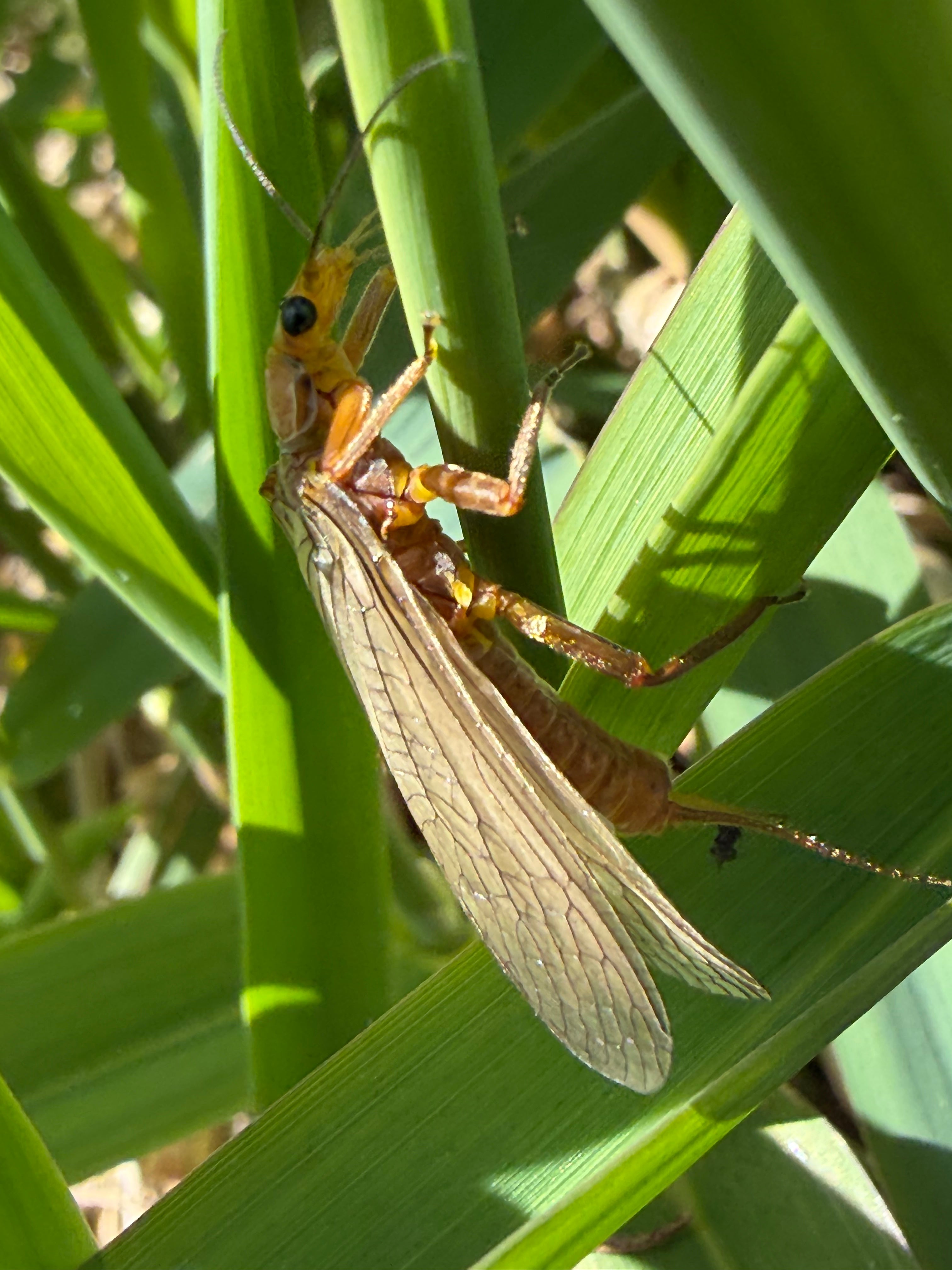
I was fishing way up river, where water temperatures are a bit cooler, but the anglers I have chatted with fishing around Maupin have begun to see the bugs that we wait all year to see….the stoneflies have begun crawling out of the river and are being spotted in the bushes. Luke was out fishing yesterday and said that he saw the golden stones (just one or two) in nearly every clump of grass along the river. Here are the photos he sent to me yesterday afternoon:


I know that you all know this hatch as the salmonfly hatch, but it is actually a stonefly hatch with several species of stoneflies taking part. We have the giant stonefly aka salmonfly, as well as the nearly as large golden stone (pictured above) and zillions of little yellow sallies who come to the party a little bit later.
As the weather warms up this week and gets into the 80s next Monday, we expect these bugs to start to get very active. At first, the activity will be concentrated in the riverside trees and bushes, where they are mating, but hot temperatures are what these bugs need to get on the wing, and those temperatures are coming. At this early stage of the hatch, you need to fish your dry flies under the overhanging trees and tight to the grassy shoreline because trout will be waiting there to grab any mating stones who fell off the orgy pile and into the river.
There are a lot of steelhead smolts in the river at the moment and they can be a little annoying when you are targeting the larger fish - but they do keep people happy because they would rather be catching something rather than going empty handed all day.. Unfortunately, many of these baby steelhead on their way out to the ocean to grow large are in the “keeper” size range for Deschutes trout, The Deschutes has a slot limit on trout of 9-13” and many steelhead smolt fit in that range. So, the few anglers that choose to kill fish may actually be taking wild steelhead out of the gene pool - a species that is protected under the Federal Endangered Species Act. That is a real shame.
If you want to avoid killing wild steelhead, try having a catch and release policy on the Deschutes - there are plenty of other rivers and lakes in this state that are stocked by Fish & Wildlife with hatchery fish that you can take home to eat. The Deschutes is not stocked with trout. It is one of those rare western rivers that has a 100% wild and native population of trout.
The only clipped hatchery fish on the Deschutes River are steelhead. The steelhead are a mix of wild and hatchery fish (look at the fin just above the tail, the small half-moon shaped rubber nub of a fin called the adipose fin) and the hatchery steelhead are marked as such by shaving off the adipose fin. So, the outmigrating smolts will have this distiction - and they are usually more silvery and less colorful and beautiful than a rainbow trout. Here is a photo of a hatchery steelhead smolt that I took on Sunday to show the missing adipose fin - just look at the dorsal fin by my pinky finger and follow the back of the fish down to the tail - that is where the adipose fin should be. Instead of the half-moon fin, there is a scar where the fin used to be. The second picture of a different fish shows the more silvery color that most have -and some will have scapes and scars from living in concrete pens.


The good news is that the smolts are on their way out of the river to go to the ocean to grow large for a few years before they return to the Deschutes. Also good news, if anglers choose to keep two small “trout” they will catch their two steelhead smolt very quickly (as they are hard to keep off the hook this time of year) and once those two fish 9-13” are killed, their day of fishing is done. You cannot fish any more after you have caught your limit.
This si a quick fishing report just to let you know that we are seeing the first few stoneflies and that we expect to see more and more each day as the weather and water warms up. Keep checking back with us for updated fishing reports - we are the only fly shop on the river with a finger on the pulse of what is happening out here daily. We talk to hundreds of anglers every week whose waders and boots are still dripping wet with water from the Deschutes. If you want up to the monute fishing intel - you come to Deschutes Angler.


