
Mayday, Mayday, Mayday!
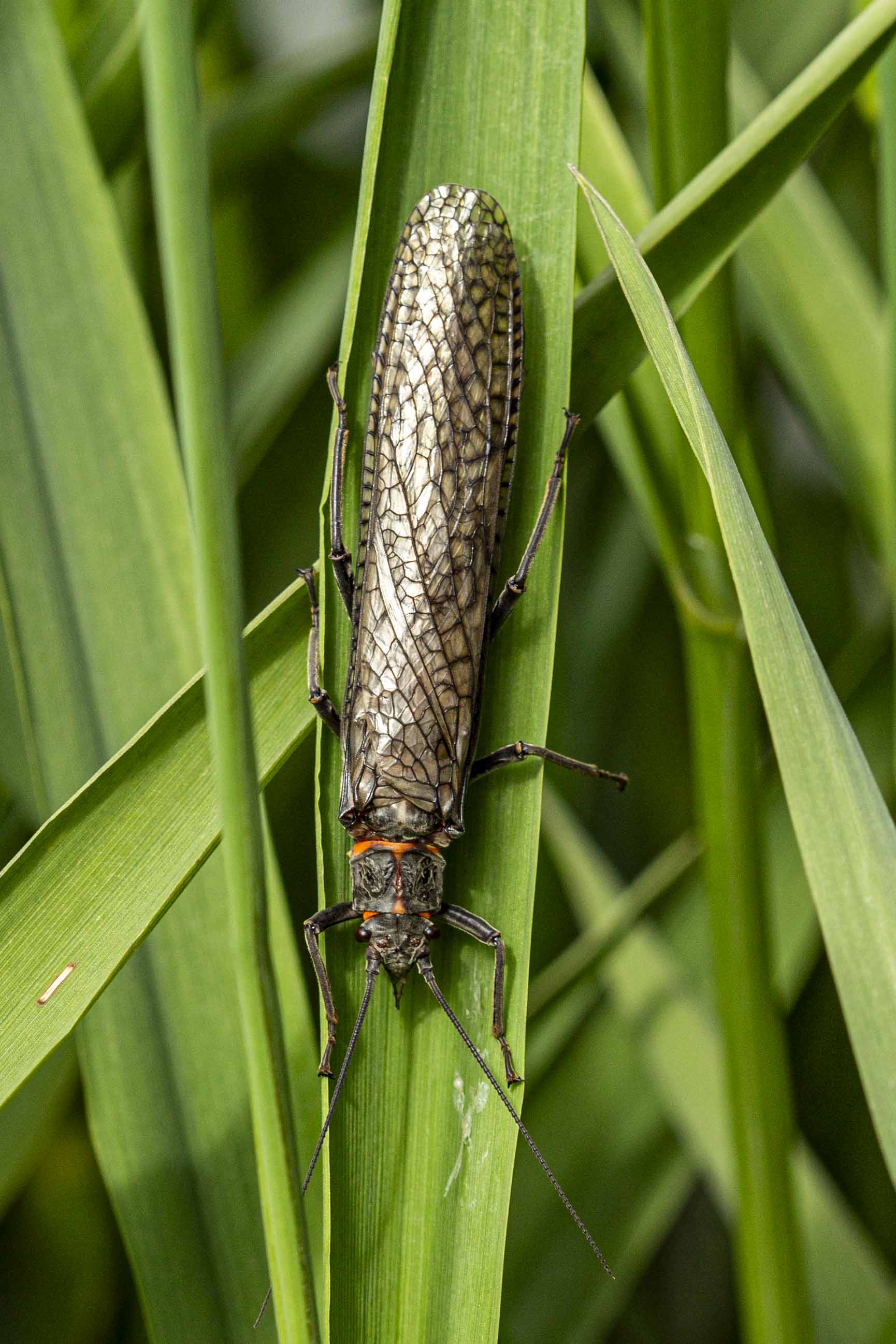
The international call of distress - Mayday, Mayday, Mayday is exactly what the salmonflies and golden stones in the bushes will be calling out this weekend as they begin to take to the skies. Before long, they will be on the water flailing and getting the attention of the hungry trout.
Yes, this is the fishing report that I look forward to writing each year. The salmonfly hatch has officially kicked off and, for once, the weather is going to help get these bugs moving right away. We are forecast to have a high-overcast hot weekend - temperatures will be in the mid-eighties through the week and that will get these bugs in the air far earlier than we have seen them in years past.
I was down on the river yesterday shooting a little video to show how many bugs are already in the bushes, and I was surprised to see all three species of stoneflies crawling in the grass. The big boys, who claim much of the notoriety of the hatch, the Salmonflies - they were out in good numbers hanging onto the blades of grass along the river’s edge. I was a little less than a mile downstream of Maupin and saw only a few golden stoneflies in the bushes alongside the salmonflies. Typically, the salmonflies hatch first and are quickly followed by the golden stones - but this year they are coming off at the same time. We have been seeing both goldens and salmonflies in the grass for a few days now. The bonus sighting was the handful of little yellow sallies that I saw alongside the big guys - we normally do not see many sallies until the end of May.
We expected the salmonfly hatch to come off a bit early due to warmer spring temperatures and very low flows. Normal flows out of the dam in Madras are between 4500 and 4700 CFS on this date. This year, the flow is 3590 CFS - just a tiny bit higher than the lowest ever recorded flow in over 100 years of record keeping on this date. The low flows have helped the water to quickly warm up into the high 50s - which is what triggers the bugs to begin their final journey.
Water temps at the Madras dam are inching towards 56-57 but have not quite reached that magic number - the temperature at which we see the stoneflies start to crawl from the river and into the bushes. I rarely venture as far upriver as the Warm Springs to Trout Creek section - it has been too crowded up there for my liking for over 30 years - but I am fairly sure that the hatch has not quite gotten that far upriver. I was in the Whitehorse area on Sunday of last week and saw zero stoneflies of any sort in the bushes along the water’s edge. The stoneflies will get there eventually, but for now any angler who wants to see this hatch in action needs to get to the Maupin area this weekend.
Now, let’s break down this hatch and clear up a few things that can be confusing to anglers who have not been out here before…
The SALMONFLY hatch is just the general term we use to describe the emergence of a few different species of the STONEFLY. Salmonfly is just a moniker given to the giant stonefly (Pteronarcys californica) - the largest stonefly and most robust aquatic insect in the Deschutes. The salmonfly will be the large, darker stonefly with an orange or salmon color belly.

Adult Giant Stonefly aka Salmonfly
The golden stone (Hesperoperla pacifica) is slightly smaller than the salmonfly (though the female golden stones are usually as large or larger than the male salmonflies) and, you guessed it, is a golden color.

Golden Stones mating in the grasses
The little yellow sally is way smaller than the others and from the Perlodidae family - we have several species that will hatch throughout the month of May and usually into June. They all have a slightly different yellow hue, but they are all yellow.

Little Yellow Sally - Isoperla stone
The thing that really confuses a lot of anglers about this big hyped-up “HATCH” is that there doesn’t SEEM to be a hatch at all. “I just never saw any fish rising.” Is a line I have heard in the fly shop more times than I care to remember. Aren’t hatches supposed to make the water boil with rising fish? Well, yes, many hatches do get so many fish rising to the surface that it appears to be “boiling.” Those hatches -like caddis, mayflies, and midge hatches - do get the fish feeding on the surface very consistently. The insects rise from the bottom of the river and lay on the surface of the river as they are waiting for their wings to develop enough to fly away. The opportunistic trout pick them off one by one and cause the water to “boil” with their rising and feeding behavior.
During the salmonfly hatch, you will NOT see fish feeding with any consistency because insects in the stonefly family do not rise up from the bottom - they CRAWL out of the river at night and onto the dry land where they anchor their feet on grasses, sticks, rocks and tree trunks. Once they are securely anchored, the stoneflies will then begin to break free of their old nymph body, emerging out of a zipper-like opening on the back of the nymph body. As they emerge, their crumpled up wings will slowly unfurl to assume their flat position over the abdomen of the stonefly. They leave the empty paper-thin shuck behind them as they crawl off into the grasses or leaves to find a mate, You will see these ghost-like husks all over the river’s edge.

Get me outta this old body!

Some years, the stoneflies will crawl out into cold and rainy spring weather and will immediately burrow deep into the grasses to try to retain a little body heat. They may stay hiding for weeks, just waiting for the weather to warm up enough for them to start to actively crawl around, mate, and (only when air temperatures reach the high 80s) begin to fly out over the river to lay eggs. With the temperatures already getting to the mid- to high-eighties this week and weekend, the stoneflies will be on the fast track to egg-laying.
Here are the times when stoneflies are most likely to be eaten by trout:
- During the three-year nymph stage when crawling and tumbling from rock to rock - particularly in late April when they begin to start moving towards shore to crawl out of the river.
- When they are mating on the edge of the river in the trees and bushes and grass hanging over the water. There is a lot of jostling for position in the orgy pile, and falling into the water is a fairly common occurance. Add in a few big gusts of wind, and you have stoneflies hitting the water left and right.
- During the egg-laying stage of the hatch when the females fly out over the water to drop their eggs (salmonflies) or to land on the water to lay their eggs (golden stones).
Nymph fishing with a black stonefly or mottled brown/yellow stonefly is a smart way to start the day. The river bottom is a carpet of stonefly nymphs at this stage of the hatch - all of them trying to find a great spot to crawl out of the river. Many stones do a bit of drift migration before hatching to ensure that they aren’t mating with close relatives. This means that they allow themselves to tumble with the current for miles in order to finish their 3 year life-span by mating with the sweet honey from across town.

By mid-day, you should tie on a dry fly - either a salmonfly or golden stone - and start chucking that dry in places where stoneflies might be likely to fall into the water AND in places where big Deschutes fish are likely to feel most at ease. Standing in ankle deep water and casting into ankle deep water is NOT the way to catch trout on the Deschutes. You need to think like a trout - you need water that has some DEPTH, ROCKY BOTTOM, and ideally COVER or SHADE. If you can find a mature alder tree with branches that extend out over the water, with deep water under the branches, and with a shade pocket under those branches, THAT is where you want to pitch your fly.
To increase your odds of hooking a trout, tie a small beadhead dropper off the bend of the hook with 5X tippet. What a dropper can do for you is get the attention of a trout that might not necessarily be looking up. A trout sitting in his safety zone - down in the water column about 3-4 feet - may not see your dry fly alone, but the dropper nymph cruising through the water 2 feet below the dry just might make that trout tilt up to take a closer look. As he tilts up to grab the nymph, he notices the CHEESEBURGER on the surface and may just decide to grab that delicious and nutritious morsel. It helps if the nymph has a tungsten bead - this will get it into the zone quickly.
Tall grass lines along the river’s edge are also good places for the trout to get stoneflies this early on in the hatch - but remember that DEPTH is key. Way too many anglers waste quality fishing time standing in water that they can WADE easily, making long casts because they have found a place without any trees or bushes to obstruct their fly line as it sails through the air. These people might look cute in their social media posts, but they won’t be successful in fishing the salmonfly hatch until they are willing to get down and dirty in the jungle.
JUNGLE FISHING - a term I coined in this fishing report 25 years ago, exactly describes the water that fishes best during the salmonfly hatch. If you are scraped up, dirty, itchy from poison ivy encounters, and EXHAUSTED from crawling up and down steep banks all day long - then you are getting into the right types of water. Lost your fifth salmonfly to the jungle of trees and bushes all around you? Good for you - you are learning how to fish the Deschutes salmonfly hatch!
We can sell you all the best big, bushy salmonfly dries and golden stone dries for this hatch, but they won’t work unless you fish them in the right type of water.
In addition to the exciting stonefly hatch that has just kicked off - we are still seeing some epic mayfly hatches and those should be fantastic this weekend with the cloud cover in the forecast. There is a thin cloud layer now, and more high clouds in the forecast. Combine the cloud cover with the very light winds and you have a dream forecast for Blue WInged Olives and Pale Evening Duns mayflies to start popping off the water from noon to 3:00.
There are midges and caddis in the air too - so bring your fully-loaded fly box and be ready to change flies often. Trout on this river do not communicate well with one another, so one tree may have a trout eating BWO under it, the next tree has a trout looking for dead caddis, and the next trout is waiting for a salmonfly to make a deadly mistake whilst mating.
This should be a fantastic weekend and week in the Maupin area. Most of the anglers are clueless to the fact that the hatch has begun. The guides were probably not expecting the bugs to be out before Cinco de Mayo, and thus the river should not be all that crowded.
If the temperatures were not forecast to be so warm, heck, I wouldn’t even be half as excited as I am writing this report. We normally see a few bugs in early May, but they are too cold to do much other than decorate the trees and the grasses like Christmas ornaments. This week is going to be different, and good, thanks to that hot spell.
One more word on some of the fish that you are likely to catch - there are a ton of steelhead smolts in the river. These are little silver trout about 8-11 inches long and many have no adipose fin (the half-moon shaped fin just in front of the tail). They are suicidal! Which is to say, they will hit even the most poorly presented fly. Currently, the vast majority of the steelhead smolt in the river are concentrated in the Warm Springs to Trout Creek section of the river, though I did see my fair share up in the Whitehorse area too. These small juveniles are on their way out to the ocean and will get to the Maupin area soon. They tend to travel in schools (so you would think they should be smarter than they are! - shameless fish joke) so if you catch a couple smolt in one spot it helps to change your location in order to give yourself a better chance at a mature 15”-18” redband trout.
We are stocked to the gills with flies and every other thing you need to make your day on the water great - come see the destination fly shop with the longest history on the Deschutes river and with a finger on the pulse of every single hatch that happens right outside our doors.


Spot on with jungle advice get under those trees and look for deep shaded water an work on that side-arm cast to hit that window under the branches👍
Good report. Hope all is well
Good report. Hope all is well
Hello everyone, I like the jungle water approach to searching for a spot to fish! The guides like it also :) cheers