
The rain is finally coming
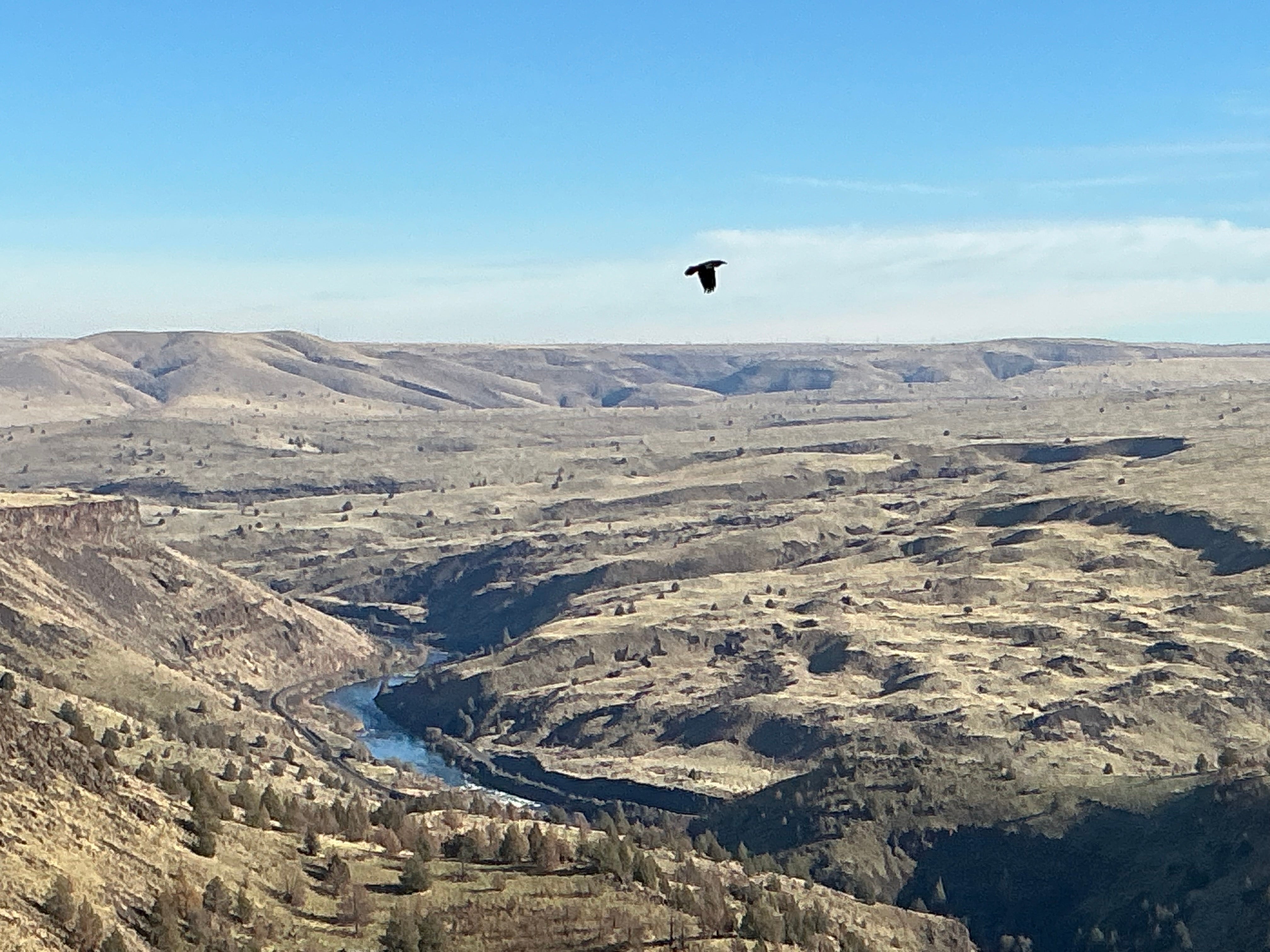
It feels like our fall has been delayed by more than a month with all this nice weather we have been having. However, we woke up this morning to a thin layer of frost covering the ground and a definite chill in the air. The sun is making its best effort to poke holes in the fog hanging over the river, held in place due to a windless morning.
The weather ahead looks to be cooling down and the rain is coming on Sunday and on through next week. We will still be open seven days a week during the month of November (except for Thanksgiving Day when we will be closed). On Sundays this month we are closing at 3:00 PM but will be closing on Sundays starting in the month of December.
Anglers popping into the shop this week had a mixed bag of reports. Some were trying hard to hook steelhead with no luck over 2-3 days. Some hit the incredible Blue Winged Olive hatches in the mid-day under rainy skies and experienced some of the best trout fishing just below the big riffles and rapids. Sunny days like today will prove to be a lot tougher for those looking for trout on dry flies, so nymphing or streamer fishing will be your best bet for trout today.
Our steelhead window is coming to a close, though fishing will still be viable through the end of the year. We only have summer-run steelhead in the Deschutes, so we turn our attention to rivers with fresh fish entering them in January, February, and March. The Deschutes has cooled down a bit now, with water temperatures dipping from the low fifties to 49 degrees.
Over coffee and breakfast this morning, I mentioned to John that the water temperatures on the Deschutes just dipped below 50 degrees for the first time since spring. I asked him what he thought about 49 degree water and he had this to say, “This is the absolute ideal temperature for fishing and for fish. The fish feel, at 49 degrees, the same way that we feel when we have 65 degree temperatures in the fall. We feel like we can move around vigorously without overheating, we feel more energetic, and we certainly feel hungrier than we do when it is hot. Steelhead love these water temperatures! Bill McMillan always said that 49 degrees is the ideal dry-line water temperature. Tell the people that they can catch steelhead all winter long on other rivers with the sinking line, so they shouldn’t miss out on the last best dry line swinging temperatures on the Deschutes.”
For many of you, Bill McMillan might be a name that is new to you. Bill was John’s steelhead fly fishing mentor and neighbor back in the 1970s and 1980s when they both lived on the Washougal River. Bill McMillan is one of the finest angling writers to ever grace the published pages of fly fishing magazines. He is a scientist who dedicated his life to studying steelhead, protecting steelhead, and to writing about them. His absolute masterpiece is a book titled, Dry Line Steelhead published in 1987. I have a limited edition copy in front of me which I extracted from our fly fishing library this morning. It is number 15 of 200 and is signed to John. One of the coolest things about the limited edition hard copy Dry Line Steelhead is the fly mounted on the inside cover of the book - a Washougal Olive. My guess is that Bill tied all 200 Washougal Olives - one for each of his limited edition publications - but I do not know that to be true. I asked John if he thought so, and he said “Definitely!”

The inside cover of Dry Line Steelhead - Limited Edition Hardcover
I will be sharing passages from this book throughout my upcoming fishing reports. Today’s passage comes from the chapter titled, The Dry Fly and Other Steelhead Methods. McMillan writes this:
“For many years surface fishing was ignored by most steelhead fly fishermen. It was generally held that these sea-run fish would seldom, if ever, rise to a fly despite available literature on dry fly fishing for steelhead that dates at least to the 1940’s. Even when steelhead were occasionally risen to the surface, the incident was most often passed off as mere accident. Those few anglers who regularly caught steelhead on top were suspicioned as heretical wizards - even subjected to outright disbelief.
However, over the past 10 years attitudes have changed and surface methods are increasingly accepted and catch a lot of steelhead. Many anglers new to the sport are proving that it takes no wizardry to move steelhead to the surface, provided that water temperatures are within the 48° to 60°F degree optimum. More experienced anglers are regularly taking steelhead through an even broader temperature range of 44° to 65°F during an extended season from March into November. There’s even a chance of hooking the occasional steelhead on the surface every month of the year and in water temperatures well outside normal expectations.”

To John - Fine angler & perpetual friend of the resource. My Best, Bill McMillan
This piece of literature was originally written in 1983. Oddly enough, what Bill writes in this passage about the skepticism of other anglers when it comes to fishing the surface for steelhead - well, it feels like the conversation I have daily with anglers in the shop. Most newer steelhead anglers who walk into our store go directly to the steelhead fly bins full of brightly-colored bulky flies with flash and weighted heads. These are patterns that we carry for other rivers mostly, for British Columbia and Alaska anglers or for anglers pursuing winter steelhead on the west side of the cascades. Of course, some of the smaller patterns like the Hohbo Spey, the Klamath Intruder, and the string leech have their place fishing a sink tip on the Deschutes in the mid-day sun or for the late-season when water temperatures drop into the low 40s. New-to-steelhead fishing anglers are often under the impression that you must have a HUGE fly, a HEAVY sink tip, and that SKAGIT lines are the only way to deliver the fly. When I mention fishing on the surface or in the surface film, I certainly get that skeptical look that says, “What type of witchcraft or wizardry do you have up your sleeve, fly shop lady?”
My introduction to steelhead fishing and my entire career of steelhead guiding was dominated entirely by floating lines, Spey rods, and surface methods for steelhead. I never carried flies larger than those tied on size 3 Alec Jackson hooks, I never used a Skagit head (only Scandi heads), and I never swung with a sink tip. I fished the floating line and the surface or near-surface fly with blind faith because it was what my mentors were doing and it was the way that everybody was fishing for steelhead on the Deschutes in the late 1990’s and early 2000’s. It worked. Call it which craft or call it wizardry, but the numbers didn’t lie - we were hooking multiple steelhead each day using these methods. The more steelhead I saw hooked on the floating line, the more faith I had each day in that method. These were years of big numbers of steelhead returning to the rivers of the Columbia basin, so it was not uncommon to hook 6-8 steelhead in a day and some of the biggest days resulted in double-digit numbers of fish to the swung surface fly.
It didn’t hurt that the numbers of steelhead returning to the Deschutes were super high during my early years of guiding. There were simply spots that were practically a “God-damned guaranteed steelhead” (in the words of John Hazel) and all I had to do was to wade my anglers through those spots, stepping and swinging, in order to connect with a chromer. Thanks to those years with a lot of fish in the river, there was time to experiment with different fly patterns. I could tie up something at the bench and use my clients to test it out over the days that ensued. I had a lot of confidence in purple, particularly in my newly-invented Lum Plum pattern, but I had to push myself to try other colors of steelhead flies just to see what else would work. This led to the development of many new patterns like the bruise (black and blue), the girlie girl (pink and purple), the engagement (white wing over a green body), and the Mexican hat (5 different colors like the hat band on a sombraro - a fly to prove that the body color really doesn’t matter).
Over twenty plus years of guiding, I came to firmly believe that the fly on the end of your leader doesn’t matter as much to the steelhead as it matters to the angler on the other end of the line. Fish a fly you have confidence in. If you have confidence, you will fish better, you will not second guess your casting, your swings, or your choice of water. Fish runs quickly and efficiently and move on to different water if you don’t raise a steelhead. The beauty of near-surface fishing is in the RAISING of the steelhead. Seeing a swirl on the surface of the pool at the exact spot where you know your fly is swimming is absolutely jarring and experiencing an explosion of whitewater on your skater is enough to stop the heart, momentarily, of the most jaded angler. Fishing near-surface allows you to see that moment that the steelhead chooses your fly and envelopes it with a wide-open white mouth.
Swinging flies on sink tips will not elicit the bone-jarring grabs that surface swinging will, simply because you are taking the fly to the face of the fish instead of enticing the fish to come to the fly. Personally, in my search for steelhead, I want to find those fish willing to play the game and charge the fly. I don’t want to have to settle for the lethargic fish that needs to be whacked in the face to take the fly.
Enjoy the last hurrah of summer steelhead on the floating line if you are so inclined! If you prefer to trout fish, you have an entire winter ahead to explore the hatches, the nymphing, and the streamer fishing that the Deschutes has to offer. The upper river will close at the end of December, but the Deschutes around Maupin and down to the mouth is open year-round.


Great thoughts. Thanks Amy for taking the time to share. ;0)